Get Back To Doing What You Love Without Surgery
PRP is an injection treatment that uses your own concentrated platelets to start a repair process in tendons and ligaments that have not healed on their own.
Tendons connect muscles to bones and make it possible to do all kinds of physical activities. Overuse or damage to tendons over a long period of time causes the collagen fibers that make up the tendons to form small tears, a condition called tendinosis. Over time this tendinosis can progress to more damage and bigger tearing of the tendons.
Ligaments are collagen fibers that hold bones together, stabilize joints, and control the range of motion. Tendons and ligaments have a poor blood supply and do not easily heal from the damage caused by sprains, strains, and repetitive motion.
80–85%
Studies suggest an improvement of 80–85%. Some patients experience complete relief from their pain, and the results are generally permanent.
Up to 40%
Procedures with PRP have strengthened and thickened tendons up to 40%.
2–3 hours
The entire procedure, from the blood draw to solution preparation and injection, is completed in a single visit.
What PRP is, and why it works
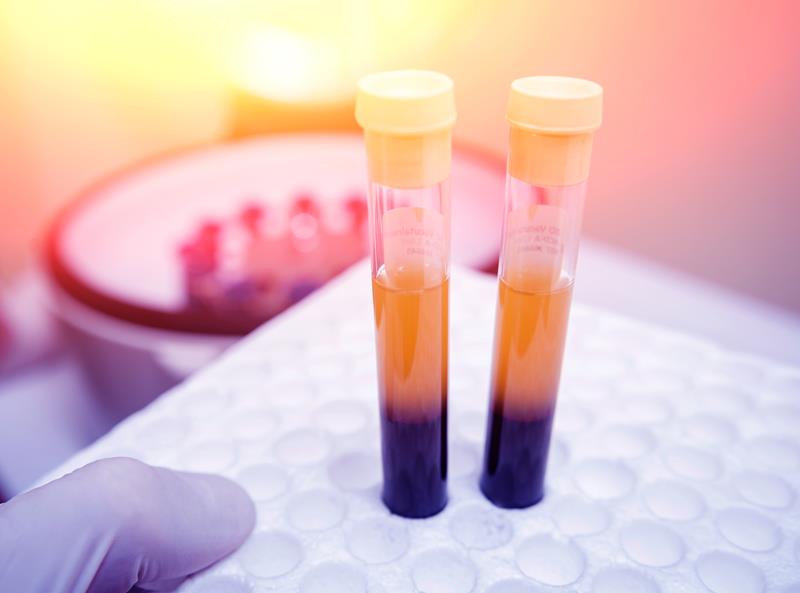
Platelet Rich Plasma or PRP is concentrated platelets — the body’s repairmen for damaged tissue — and blood plasma. The concentrated platelets in PRP contain huge reservoirs of bioactive proteins, including growth factors vital to initiate and accelerate tissue repair and regeneration. These bioactive proteins initiate connective tissue healing, promote the development of new blood vessels, and stimulate the wound healing process.
While platelets are associated with clot formation, they are instrumental in injury healing. Platelets are naturally extremely rich in connective tissue growth factors. Injecting these growth factors into damaged ligaments, tendons, and joints stimulates a natural repair process.
But to benefit from these natural healing proteins, the platelets are first concentrated. In other words, PRP recreates and amplifies the body’s natural healing process.
Platelets are a specialized type of blood cell
-
93%
Red blood cells. The bulk of what is drawn.
-
6%
Platelets. The fraction that carries the growth factors, and the fraction PRP concentrates.
-
1%
White blood cells. All of it floating in the liquid part of the blood, called plasma.
Concentrating that 6% is the whole point of the procedure. It is why PRP is not simply an injection of your own blood.
How PRP is done
All of it happens in one visit, in our own laboratory.
A small blood draw
A small amount of blood is taken from the patient. Because PRP uses your own blood, you cannot be allergic to it.
Concentration in our lab
The blood is placed in a centrifuge, which spins and separates the platelets, red blood cells, and white blood cells. Under sterile conditions the platelets are further isolated and concentrated into different versions of PRP, with varying platelet concentrations depending on the specific injury and patient being treated.
Placed under image guidance
Using ultrasound and/or fluoroscopic live x-ray guidance, needles are directed safely and accurately to the area being treated. Precision is what separates a treatment that reaches the damaged structure from one that does not.
How often are injections given?
After the initial procedure, a follow-up visit is scheduled 6–8 weeks later to check on healing progress. Some patients respond very well to just one procedure. However, 2–3 procedures may be necessary.
I’ve heard of cortisone shots. Is this the same thing?
No. They are opposite strategies.
Cortisone or steroids are powerful anti-inflammatory medications that can temporarily reduce inflammation and pain. Cortisone shots may provide a quick fix for temporary relief and lessening of inflammation, but the doctor can only do them a few times because of the known harmful effects.
What the studies show
-
01
Cortisone injections damage cartilage and can weaken tendons and ligaments and inhibit healing.
-
02
PRP therapy is able to heal and strengthen damaged tissue. Procedures with PRP have strengthened and thickened tendons up to 40%.
One suppresses the healing response. The other is designed to start it.
What conditions benefit from PRP
PRP works best for chronic ligament and tendon sprains and strains that have failed other conservative procedures, including:
Shoulder & elbow
Rotator cuff injuries. Shoulder pain and instability. Tennis and golfer’s elbow.
Hip & hamstring
Hamstring and hip strains.
Knee
Knee sprains and instability. Patellofemoral syndrome and patellar tendinosis.
Foot & ankle
Ankle sprains. Achilles tendinosis and plantar fasciitis.
Also osteoarthritis — the “wear and tear” kind.
PRP can help stimulate a “smoothing over” of the roughened and arthritic cartilage, reducing the pain and disability of arthritis. This includes knee arthritis, hip joint arthritis, and other joint arthritis, as well as knee, hip, and other joint osteoarthritis alongside other chronic tendon and ligament problems.
The honest answers
Do the injections hurt?
Because the injured area is first anesthetized with lidocaine, the actual injections are only mildly to moderately uncomfortable. Once the lidocaine wears off in a few hours, there is usually moderate pain for the next few days.
What do I avoid afterward?
For the first week after the injections, avoiding anti-inflammatory medications — including Advil, Motrin, ibuprofen, and Aleve — is critical. These will interfere with the healing response. Tylenol is OK. Your doctor may prescribe pain medication also.
Are there risks?
Because PRP uses your blood, you cannot be allergic to it. Anytime a needle is placed anywhere in the body, even getting blood drawn, there is a risk of infection, bleeding, and nerve damage. However, these are very rare. Other rare complications can occur depending on the area being treated, and will be discussed by your doctor before starting the procedure.
Does insurance cover PRP?
Most insurance plans, including Medicare, do NOT pay for PRP injections. Our patient coordinator will go through cost with you on the phone, before you commit to anything.
Additional therapies
To get the maximum benefit from the procedure and help prevent re-injury, patients should follow a comprehensive and individualized procedure plan incorporating nutrition, nutraceuticals, exercise, and hormone balancing.
This allows the newly developing connective tissue to mature into healthy and robust tendons or ligaments. The injection starts the repair. What you do over the following weeks decides how much of that repair holds.
Related treatments
-
01
Prolotherapy uses a dextrose solution rather than your own platelets, and is often the right starting point for ligament laxity.
-
02
Regenexx procedures carry a higher biological signal for joints where the damage is further along.
Which one fits your joint is a question for the evaluation, not for a web page. Dr. Derrington will tell you directly if PRP is not the right treatment for your problem.
Find out whether PRP fits your injury
Call us to schedule a comprehensive evaluation. Our patient coordinator will answer your questions about the process, timing, and cost on the phone, before you commit to anything.
Send your imaging ahead
If you already have an MRI or X-ray, upload it before your visit and Dr. Derrington will review it in advance.
Two offices
Carlsbad and Laguna Hills, serving San Diego and Orange County.
Or call us directly at (760) 721-4000 - Carlsbad Office or (760) 721-4000 - Laguna Hills Office
Ready to find out if PRP fits your injury?
Call us to schedule an in-office or telehealth appointment, or fill out the form and our team will reach out. We will ask about your condition, explain which options may apply, and tell you honestly whether an evaluation makes sense.
If we are not the right fit for your condition, we will tell you — and try to point you in the right direction.
"*" indicates required fields